Inhale the Past: The Deeply Weird, Completely Understandable Reason Collectors Are Sniffing Old Game Boxes at Retro Cons
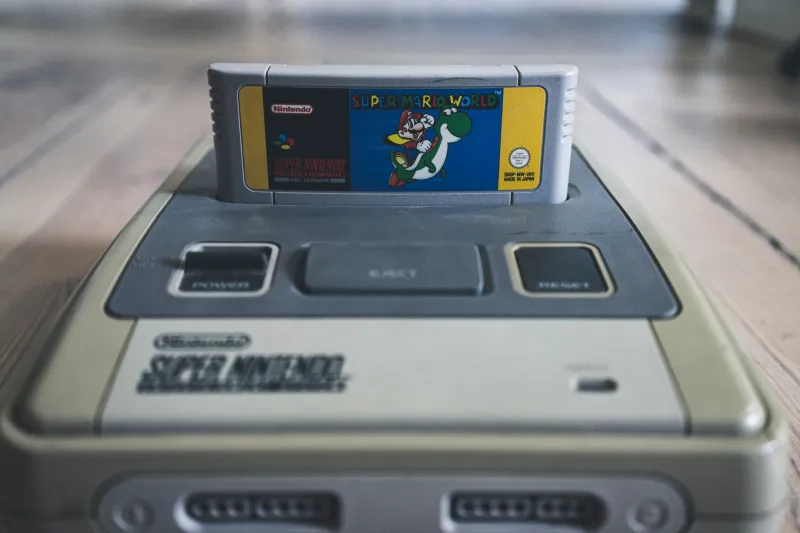
Let's set the scene. You're wandering a retro gaming convention somewhere in the continental United States — maybe it's Portland, maybe it's Columbus, maybe it's a convention center in suburban New Jersey that smells aggressively of carpet cleaner and funnel cake. You stop at a vendor table stacked high with NES cartridges and loose SNES boxes. You pick up a copy of The Legend of Zelda: A Link to the Past, complete in box, and without thinking — almost reflexively, like a golden retriever greeting a stranger — you bring it to your face and inhale.
And there it is. That smell.
If you know, you know. If you don't know, congratulations on apparently having a normal relationship with inanimate objects.
The Smell Is Real and Science Has Opinions About It
Here's the thing: you're not imagining it, and you're definitely not alone. That distinct aroma wafting off a 30-year-old game box — that papery, slightly chemical, faintly plasticky cocktail of nostalgia — is a genuine, documentable phenomenon. And the reason it hits so hard has everything to do with how your brain is wired.
Scent is the only sense that bypasses the thalamus — the brain's central relay station — and connects directly to the amygdala and hippocampus, the regions responsible for emotion and memory. This is why a whiff of sunscreen can teleport you to a 1994 family vacation, or why the smell of a specific cafeteria lunch tray can make you feel eleven years old again. Scientists call it the Proustian memory phenomenon, named after the French novelist who famously wrote about a madeleine cookie unlocking a flood of childhood recollection. Turns out Marcel Proust would have crushed it at a retro gaming convention.
The specific chemistry of vintage game packaging adds another layer. Older cardboard boxes off-gas compounds from aging paper fibers, ink oxidation, and the particular plasticizers used in the manufacturing of cartridge shells and instruction manual covers during the 1980s and 90s. These compounds break down over decades in ways that create a scent profile that is genuinely, chemically different from modern packaging. You're not just imagining that old stuff smells different. It does. And your brain has filed that exact smell under "Christmas morning, age seven."
Convention Culture: The Sniff Is Normalized Now
At retro gaming conventions across the country — events like Portland Retro Gaming Expo, the Midwest Gaming Classic in Milwaukee, or any of the dozens of smaller regional gatherings that spring up every fall — the sniff test has quietly become an accepted part of the browsing experience. Vendors will tell you without blinking that customers regularly pick up a complete-in-box game, smell it, and put it back down. Or smell it and immediately hand over cash.
"I've had people tell me a box smells right before they buy it," says one longtime vendor who's been selling at conventions for over a decade. "And I've had people put something back because the smell was off. Like, the smell is part of the condition grade at this point."
That's not hyperbole. In the increasingly meticulous world of retro game collecting, condition is everything, and smell has become an informal but genuinely meaningful data point. A box that smells musty or chemically wrong might indicate water damage, improper storage, or — the great white whale of collector paranoia — a reproduction. A box that smells correct, that hits that specific sweet spot of aged cardboard and old-school ink, is a box that has been well-preserved and authentically old.
The sniff test, in other words, is not just emotional. It's practical.
Different Formats, Different Smells — Collectors Know the Difference
Ask a serious collector and they'll tell you: not all retro media smells the same, and the differences matter.
NES and SNES game boxes have a particular cardboard-forward aroma, heavier on the paper notes, with a faint sweetness that collectors often describe as "warm." Sega Genesis boxes — slightly different cardboard stock, different printing inks — skew a little more toward a sharper, more chemical profile. PC game boxes from the late 80s and early 90s, those glorious oversized cardboard behemoths that used to take up half a shelf at Software Etc., have a smell all their own: denser, more complex, sometimes carrying the ghost of foam inserts and the specific plastic of a floppy disk sleeve.
Instruction manuals are their own category entirely. The newsprint-adjacent paper stock used in NES manuals, the glossy pages of later SNES and Genesis booklets, the full-color extravaganzas that came with PlayStation games — each has a distinct scent signature that collectors describe with the kind of reverence usually reserved for wine tastings. "Earthy." "Slightly sweet." "Like a library that also sold candy."
Someone at a convention in Chicago once spent four minutes explaining to a vendor the precise olfactory difference between a first-print and a later-print copy of a specific NES title. The vendor did not have the heart to end the conversation.
The Status Symbol Nobody Expected
Here's where it gets genuinely fascinating from a cultural standpoint: the ability to accurately assess a game's scent — to know whether that copy of Earthbound smells like it spent the last thirty years in a climate-controlled collection versus a damp garage — has become a low-key status symbol in collecting circles.
It's a form of expertise that can't be faked. You can memorize price guides. You can study label variations online. But the scent knowledge only comes from handling a lot of product over a lot of time. It's embodied expertise, the kind that lives in your nose and your memory rather than in a spreadsheet.
Collecting communities on Reddit and Discord have entire threads dedicated to describing and comparing the smells of different formats, different eras, different regions. Japanese Famicom carts apparently smell different from their NES counterparts. European PAL releases have their own thing going on. People have opinions. Strong ones.
It's Not Weird. It's Human.
Look, from the outside, watching a forty-year-old sniff a Super Nintendo box at a convention table might look like a cry for help. But zoom out for a second and consider what's actually happening.
These are people chasing a feeling — a specific, irreproducible sensory experience tied to some of the most formative moments of their lives. The Christmas when Super Mario World was under the tree. The Friday night when a rental from Blockbuster meant the whole weekend was going to be okay. The specific joy of opening something new when new things felt genuinely magical.
The smell is a portal. And honestly? Given the current state of the world, who among us couldn't use a portal to a Saturday morning in 1993 every once in a while.
So the next time you're at a retro gaming expo and you see someone with their nose buried in a copy of Donkey Kong Country, don't judge them. Maybe pick up a box yourself.
Inhale.
Go home for a second.
You've earned it.