Clam Shell Comeback: The Absolutely Unhinged Reason People Are Spending Four Figures on a Phone That Can't Run Instagram
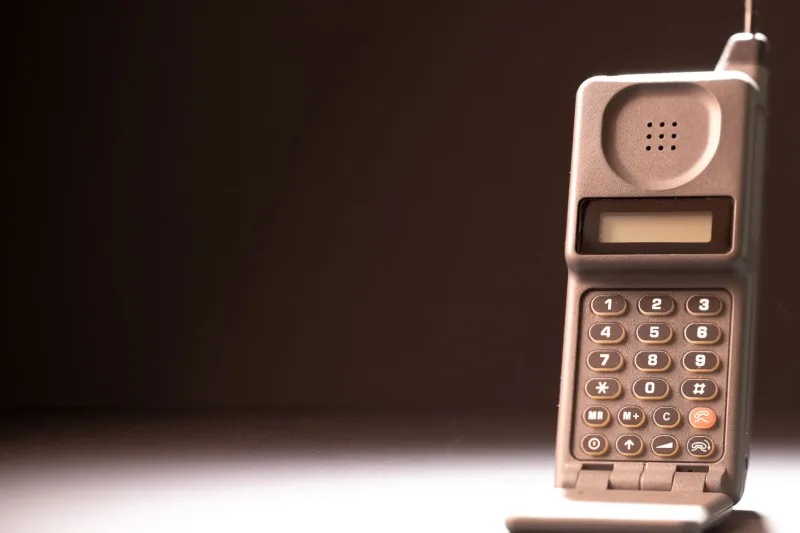
There is a man in Portland — let's call him Derek, because his name is Derek — who recently sold a barely-used iPhone 15 Pro to purchase a refurbished Motorola Razr V3 in pristine silver. Not the 2023 folding-screen Razr that costs $999 and runs Android. The original Razr. The one with T9 texting, a grainy camera, and a battery life measured in days rather than anxious glances at a wall outlet.
Derek paid $340 for it on eBay. He has no regrets. He also has no Slack notifications, no TikTok algorithm, and no idea what his coworkers posted on LinkedIn this week. He sounds, frankly, fantastic.
Derek is not alone. Across the United States, a growing and slightly smug contingent of Gen Xers and elder millennials are quietly staging a technological retreat — swapping their all-seeing smartphones for the dumb, beautiful, satisfying snap of a flip phone. And depending on how pristine the model is and how deep the nostalgia runs, they are paying anywhere from a couple hundred bucks to well over a thousand dollars to do it.
The Market That Wasn't Supposed to Exist
Vintage phone collecting has been bubbling under the surface for years, but 2023 and 2024 saw something shift. eBay sales data shows consistent spikes in searches for "original Motorola Razr," "Samsung SGH flip phone," and the ever-mythologized "Nokia 8110" — yes, the banana phone from The Matrix. Completed listings for mint-condition Razr V3s now routinely clear $200 to $500, while sealed-in-box units from the mid-2000s have fetched prices that would make a game cartridge collector raise an eyebrow.
The luxury end of the market is even wilder. Restored and customized flip phones — think original hardware fitted with modern internals just capable enough to make calls and send texts — are being sold by small boutique operations for $800 to $1,500. These aren't smartphones pretending to be dumb. They're dumb phones that have been lovingly refurbished, sometimes powder-coated in custom colors, and sold to people who have made a conscious, considered choice to opt out of the attention economy.
Which is either very cool or deeply funny depending on your perspective. Possibly both.
The Psychology of the Satisfying Snap
Nostalgia researchers — yes, that's a real job, and yes, we're all a little jealous — have documented something called "nostalgia-driven simplicity seeking," which is a very academic way of saying that when modern life gets overwhelming, people reach for objects that remind them of a time when it wasn't. Or at least when they were too young to notice that it was.
For Gen X and older millennials, the flip phone era represents something genuinely specific: the last moment when a phone was just a phone. You called people. You texted people, painstakingly, using three taps per letter. You played Snake. The device had a job, it did that job, and then it sat in your pocket without vibrating every forty-five seconds to tell you that someone you went to high school with had an opinion about something.
There's also the purely tactile dimension that nobody wants to admit is kind of the whole point. Ending a call on a smartphone requires you to tap a little red circle. Ending a call on a Razr required you to slam it shut, a motion so physically satisfying that it should probably be classified as a stress-relief tool. Anger management professionals are leaving money on the table here.
Not Just Nostalgia — Actual Lifestyle Rebellion
What makes the flip phone comeback different from, say, collecting vintage Walkmans or hunting for original Game Boys is that people aren't just displaying these things on a shelf. They're using them. Daily. As their primary phone.
This is where the conversation gets genuinely interesting. A meaningful chunk of the flip phone crowd isn't motivated purely by aesthetics or collector's instinct. They're making a deliberate statement about attention, availability, and the slow erosion of having an actual interior life when your entire social existence lives inside a glass rectangle you carry everywhere.
The "dumbphone" movement — which has its own subreddits, Discord servers, and more than a little breathless coverage in publications that really should have seen the irony coming — has been advocating for intentional technology downgrading for years. The flip phone sits at the cool, photogenic intersection of that movement and vintage collecting culture. It's a choice that communicates something: I was here before the algorithm, and I remember what that felt like.
Whether that makes you a principled technologist or someone who just really misses feeling mysterious is, honestly, a matter of personal interpretation.
The Collector's Corner: What's Actually Worth Buying
If you're even slightly tempted — and statistically, given that you're reading Retro.fun, you probably are — here's the rough lay of the land.
The Motorola Razr V3 remains the crown jewel of the affordable flip phone market. Slim, iconic, and available in enough colors to match your vintage aesthetic, a working unit in good condition runs $150 to $400 depending on color and condition. The pink and silver versions command premiums that would make a sneaker reseller nod with respect.
The Samsung SGH-E715 and similar early-2000s clamshells have a devoted following among people who want something slightly more obscure. Think of them as the B-sides of flip phone collecting — not the hits, but beloved by people who know.
The Motorola StarTAC, which predates most of what we'd call the flip phone era, is for the truly committed. A working StarTAC in good condition is a collector's item in every sense, and finding one that actually functions as a phone requires either excellent eBay luck or knowing someone who kept everything.
The Nokia 8110 — the banana phone — will cost you more than you expect and is worth every penny if you have any appreciation for industrial design and also want to confuse every person you encounter in public.
The $1,500 Question
So is this genuine simplicity-seeking, or is it the most expensive form of aesthetic rebellion available to people who already own too many vintage things? The honest answer is: probably both, and that's okay.
The smartphone has become, for many people, a genuinely exhausting object. It's a work device, a social obligation, a news feed, a camera, a payment terminal, and a slot machine all compressed into something you're supposed to carry everywhere and charge every night. The appeal of replacing it with a device whose most complex feature is a contact list is not hard to understand.
And if that device happens to be a mint-condition Razr V3 in gunmetal silver that you bought for $275 on eBay and now flip open with theatrical satisfaction every time someone calls you? Well. That's just good living.
Derek, somewhere in Portland, just snapped his phone shut on a call. He's smiling. His battery is at 87 percent. It's been three days since he charged it.
Some things, it turns out, were genuinely better.