Folder Therapy: The Millennial Compulsion to Hand-Sort 40,000 Photos Like a Deranged Librarian
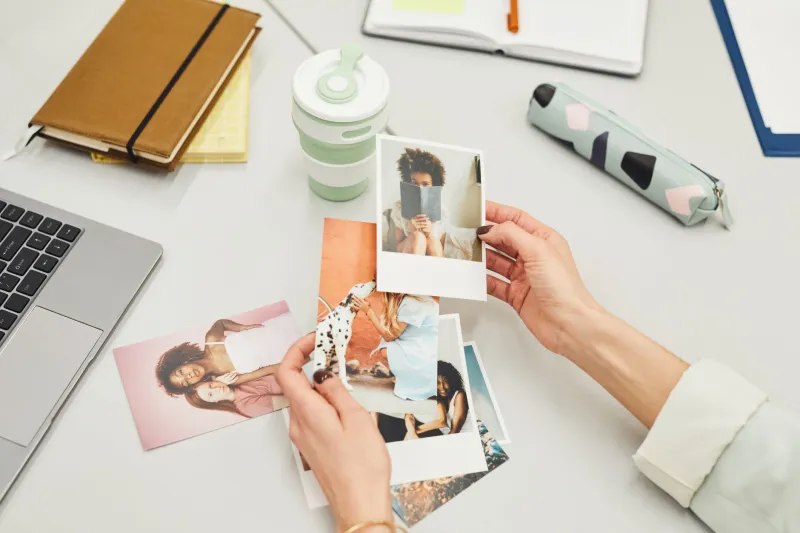
Let's set the scene. It's 11 p.m. on a Sunday. You had plans — vague, aspirational plans — to do something productive or at least vaguely relaxing. Instead, you are three hours deep into your photo library, locked in a silent standoff with a folder called "Camera Uploads" that contains 6,400 unsorted images dating back to 2011. There is a blurry photo of a Cheesecake Factory menu in there. You do not remember why you took it. You are going to keep it anyway, and you are going to file it under 2014 > Misc > Dinners > Probably April.
This is not a cry for help. This is a lifestyle.
Across America, millennials who grew up dragging MP3s into carefully labeled iTunes folders and color-coding their AIM away messages are now applying that same chaotic-perfectionist energy to their digital photo libraries. Not because they have to. Not because any practical need demands it. But because something deep in the lizard brain — the part that was forged in the fires of Windows XP and early-aughts file management — simply will not rest until every JPEG is in its rightful home.
The Algorithm Already Did It. We Don't Care.
Here's the part that makes this trend genuinely, beautifully unhinged: the tools to automate all of this have existed for years. Google Photos will sort your memories by date, face, location, and event without being asked. Apple's Photos app builds "Memories" slideshows from your library like a tiny emotional AI that knows you better than your therapist. Amazon Photos. iCloud. Dropbox. Every platform is out here doing the work, quietly, in the background, for free.
Millennials are ignoring all of it.
Instead, they are opening Finder windows or File Explorer — and yes, some of them are still on Windows, and yes, their folder hierarchies are a thing of austere beauty — and they are doing it by hand. Photo by photo. Folder by folder. Renaming files from IMG_20190714_183422.jpg to something meaningful, like july-2019-jakes-wedding-ceremony.jpg, as if the universe requires this level of specificity to maintain its structural integrity.
Spoiler: it does not. They know this. They continue anyway.
Why 2005 Was Actually the Golden Age of Digital Organization
To understand the compulsion, you have to go back. The early days of consumer digital cameras — the era of the Canon PowerShot and the 128MB memory card — produced a very particular kind of person. Someone who had to organize, because hard drive space was genuinely precious and finding anything later depended entirely on whether Past You had been responsible.
You made folders. You named them things like Thanksgiving 2004 and Spring Break Cancun DO NOT SHOW MOM. You burned them to CD-Rs with hand-labeled Sharpie titles. Organization wasn't a hobby — it was survival.
Cloud storage killed the necessity. But it couldn't kill the instinct.
For a generation that came of age during peak folder culture, the act of sorting photos isn't really about the photos. It's about control. It's about the deeply satisfying feeling of imposing human logic onto digital chaos — the same reason people still make physical to-do lists even though their phone has seventeen reminder apps. The algorithm doesn't give you that little dopamine click when you drag a file into the right folder and everything suddenly makes sense.
The Taxonomy Gets Unhinged Fast
What starts as a reasonable organizational impulse escalates quickly. Ask any millennial who has gone down this road and they will describe a folder structure that would make a NASA archivist weep with admiration and slight concern.
It begins sensibly: Photos > 2022. Fine. Rational. Then it becomes Photos > 2022 > January. Okay, still normal. Then Photos > 2022 > January > New Years Party. Sure. Then Photos > 2022 > January > New Years Party > Good Ones. And then, inevitably: Photos > 2022 > January > New Years Party > Good Ones > Vertical Only.
At some point there is a folder called Misc that contains 3,000 photos and has never been touched since it was created in 2017. It is the junk drawer of the operation. It haunts them.
They will get to it eventually. Probably next Sunday.
It's Meditation, Actually
Here's what nobody tells you about spending four hours reorganizing your digital photo library: it feels incredible. Not in a productive way. Not in a way you can explain to your partner, who has walked past the home office three times now with an expression that says we were supposed to watch something tonight.
It feels incredible in the same way that rewinding a VHS tape to exactly the right spot felt satisfying. In the same way that organizing your CD binder by genre, then alphabetically within genre, felt like a genuine accomplishment. There is something about imposing your system — your specific, personal, slightly irrational taxonomy — onto a pile of raw data that scratches an itch that modern life rarely addresses.
Everything else in 2024 is optimized for you. Algorithms curate your feeds, your playlists, your shopping recommendations. Automation handles the tedious stuff. The world is constantly trying to remove friction from your experience.
And sometimes what a human brain actually wants is a little friction. Wants to touch each thing individually. Wants to make the decision itself, even when the decision is whether a photo of a mediocre sandwich deserves its own subfolder.
The Backup Paranoia Is Also Very Real
Let's not overlook the other engine driving this behavior: a generation-wide, low-grade terror of losing everything.
Millennials watched hard drives die. They lost burned CDs. They had MySpace pages vanish overnight, taking years of carefully curated photos with them. They had Photobucket hold their images hostage. They know, in their bones, that no platform is permanent and no cloud is forever.
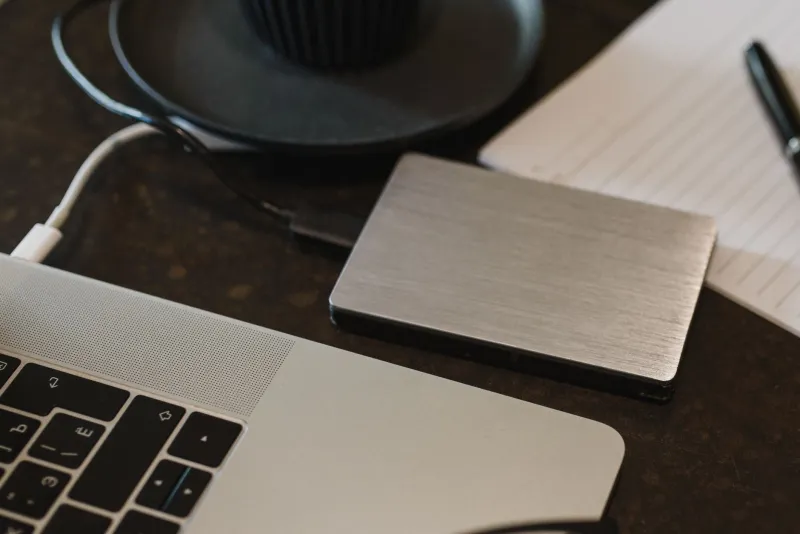
So they organize. They back up. They maintain external hard drives with folder structures that mirror their cloud storage that mirrors their laptop that mirrors a second external drive that lives at their parents' house "just in case." The manual folder system isn't just nostalgia — it's a fortress. It's the digital equivalent of keeping cash under the mattress because you don't entirely trust the bank.
Could they just pay for expanded cloud storage and let Google handle it? Sure. Will they? Not entirely. Because Google wasn't there in 2003 when your first digital camera's memory card corrupted and took your entire junior prom photo set with it. You were. You remember.
The Folders Are the Point
At the end of the day — or the end of the Sunday, six hours in, with a lukewarm cup of coffee and a photo library that is maybe forty percent sorted — what the millennial photo organizer is really doing is something that has no modern equivalent and no algorithmic substitute.
They're curating their own memory. Deciding what matters, what gets labeled, what gets filed with care and what gets dumped into the Misc folder of their personal history. Every folder name is a small editorial decision. Every subfolder is a statement about what that moment meant.
The algorithm can sort by date. It cannot sort by feeling.
And if it takes until 2 a.m. to get the 2017 vacation photos properly nested under Europe > Italy > Rome > Day 3 > The Good Pasta Place — well. Some things are worth doing by hand.
Now if you'll excuse someone, they just found a folder called Old Phone Backup 2015 and they are absolutely not going to bed anytime soon.