Dust, Drama, and .psd Files: The Millennial Ritual of Excavating Old Hard Drives Like Tiny Digital Archaeologists
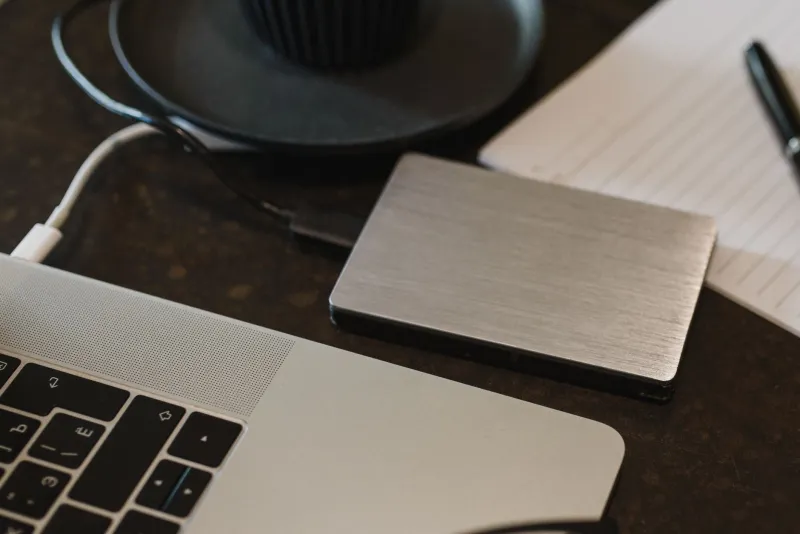
Somewhere in America right now, a millennial is sitting cross-legged on their bedroom floor, surrounded by a graveyard of old electronics, holding a 500GB Seagate external hard drive like it's the Ark of the Covenant. They haven't thought about this thing in eleven years. They found it in a shoebox behind a broken Guitar Hero controller and a lanyard from a 2009 college orientation. And now, with trembling hands and a USB-C adapter they panic-ordered from Amazon, they are about to crack it open.
This is the Great Defragmentation. Not the Windows utility — though that's spiritually adjacent — but the growing, deeply weird, oddly moving trend of millennials spending entire weekends excavating their old hard drives like amateur archaeologists sifting through the strata of their own digital past. It's part hobby, part therapy, part horror show. And apparently, everyone is doing it.
Why Now? Why Any of This?
Here's the thing about millennials and their digital lives: they were the first generation to grow up creating massive amounts of personal digital content — photos, documents, half-finished creative projects, embarrassing forum posts — but before cloud storage became the default. Everything lived locally. On hard drives. On burned CDs with Sharpie labels that said things like "MY STUFF – PRIVATE" in aggressive capital letters.
For years, those drives sat in boxes, closets, and car trunks, slowly accumulating the existential weight of forgotten memories. Then, sometime around the pandemic era and continuing into the mid-2020s, people started digging them out. Maybe it was the nesting instinct. Maybe it was boredom. Maybe it was the very human need to feel like your past actually happened and wasn't just a fever dream.
Whatever the cause, the behavior is now unmistakable: millennials are going full Indiana Jones on their old storage devices, and the internet is absolutely eating it up.
The Folder Taxonomy of a Chaotic Youth
If you've never plugged in an old hard drive from your teenage years, allow us to prepare you for the emotional journey ahead. The folder structure alone is a psychological document. There will be a folder called "School" that contains exactly one essay from 2004 and seventeen unrelated JPEG files of Linkin Park. There will be a subfolder inside a subfolder inside another subfolder, nested so deep it feels like a dare, labeled simply "stuff." Inside: more folders.
And then there are the project folders. Oh, the project folders. Aspiring graphic designers of the early 2000s, this is your reckoning. Those Photoshop files are still there — the ones where you put your own face on a movie poster, or spent three hours making a flaming text logo for a band you were definitely going to start. The .psd files open slowly, layer by layer, like a crime scene reconstruction of who you thought you were at age fifteen.
Tumblr drafts. DeviantArt watermarked images saved for "reference." Folders of downloaded MP3s organized by a logic only your 2006 brain could follow. A 47-page Word document titled "my novel" that contains exactly two paragraphs and a cast of characters named things like "Zane" and "Raven Darkwood."
It's devastating. It's perfect.
The Photos That Shouldn't Exist
The real emotional gut-punch of any hard drive excavation, though, is the photos. Not the posed ones — the candid, accidental, completely chaotic snapshots of a life being lived before everyone knew they were always being documented.
Middle school birthday parties in someone's basement with a Costco sheet cake and a boombox. Spring break trips where everyone is making a face that was apparently considered cool at the time. Photos taken with a 2-megapixel digital camera where the resolution is so low that everyone looks like a Minecraft character. Group shots at the mall food court. Your old bedroom, frozen in time, with a poster of whatever band you'd die before admitting you liked.
These images hit differently than anything you'd find scrolling your iPhone camera roll today. They're grainy and awkward and real in a way that feels almost transgressive now. Nobody was performing for an audience. Nobody was lighting or filtering or angling anything. It was just: point camera, press button, exist.
Several people who've gone through this process describe the experience using the same word, unprompted: excavation. Like they're brushing dirt off something ancient and fragile, something that could crumble if you're not careful. Except instead of pottery shards, it's a blurry photo of your friend's sixteenth birthday at an Applebee's.
The Therapeutic Loop Nobody Expected
Psychologically, there's something genuinely interesting happening here beyond simple nostalgia. Organizing and recovering old digital files scratches multiple cognitive itches simultaneously. There's the completionist satisfaction of sorting and cataloging. There's the narrative pleasure of reconstructing a timeline of your own life. And there's the surprisingly powerful emotional release of encountering a version of yourself that no longer exists — one who had no idea what was coming, who was worried about things that no longer matter, who had ambitions that either became real or quietly dissolved.
Therapists have long noted that engaging with personal artifacts — journals, photos, old letters — can be a meaningful way to process identity and change. The hard drive is just the millennial version of the shoebox of letters your grandmother kept under her bed. Except the shoebox also contains seventeen different versions of a MySpace layout you were working on and a folder of illegally downloaded Sims expansion packs.
People report spending three, four, sometimes eight hours on a single excavation session. Time evaporates. The drive that was supposed to take an afternoon becomes a weekend project, then a recurring ritual. Some folks are now building what they call "digital archives" — organized, backed-up collections of their recovered files, sorted by year, properly labeled, treated with the reverence usually reserved for family heirlooms.
What You Keep, What You Delete, What You Can't Bring Yourself to Do Either
The hardest part of the excavation isn't finding the embarrassing stuff. It's deciding what to do with it. Do you keep the 200-photo folder from a friendship that ended badly? Do you delete the writing that makes you cringe but also proves you were trying, really trying, to make something? Do you preserve the evidence of who you were before you knew better, or does knowing better mean letting it go?
Most people, it turns out, keep almost everything. The delete key feels too final, too much like erasing a witness. Instead, the files get organized, archived, and tucked into a new folder on a new drive — properly backed up this time, thank you very much — where they'll sit for another decade until some future version of you finds them again and starts the whole process over.
And honestly? That sounds about right. The past doesn't disappear just because you stop looking at it. Sometimes it just waits patiently in a shoebox, behind a broken Guitar Hero controller, until you're ready.
Plug in the drive. Take a breath. Welcome back.