Folders All the Way Down: The Obsessive New Trend of Organizing Your Digital Life Like a 1995 IT Guy
Somewhere in suburban Ohio, a 34-year-old project manager named Derek has just spent his entire Saturday reorganizing his Downloads folder. Not cleaning it out — reorganizing it. He has subfolders. He has naming conventions. He has a color-coded system for his desktop shortcuts that he will defend to the death at dinner parties. His girlfriend thinks he has a problem. Derek thinks he has finally found peace.
"I used to have 47,000 unread emails," he says, with the quiet dignity of a man who has survived something. "Now I have zero. I built a folder tree. It has eleven levels. I sleep like a baby."
Derek is not alone. Across the country, a quietly growing movement of digital obsessives — most of them millennials who grew up watching their parents label floppy disks with masking tape and a Sharpie — are rejecting the formless chaos of modern computing and rebuilding their digital lives with the rigid, almost ceremonial folder logic of the pre-cloud era. They call it digital organization. Their therapists call it a coping mechanism. We at Retro.fun call it deeply, beautifully relatable.
The Chaos That Started It All
Here's the dirty secret of modern tech: it was supposed to make everything easier, and in a lot of ways it made everything worse. Search functions were supposed to eliminate the need for careful organization. The cloud was supposed to free us from the tyranny of local storage. AI was supposed to sort everything automatically. And yet — somehow — the average American's desktop looks like a tornado hit a screenshot factory, their email inbox is a lawless frontier town, and "Documents" is basically a mass grave for files nobody has opened since 2019.
The promise was liberation. What we got was entropy with a monthly subscription fee.
"I think people underestimated how much the structure of old computing was actually doing for them mentally," says Priya, a UX designer in Austin who moonlights as what she describes as a "digital archivist" for friends and family. "When you had limited storage, you had to make decisions. Every file had to earn its folder. That constraint created clarity. Now we just dump everything into a void and hope the search bar saves us."
Priya charges $75 an hour to rebuild people's file systems. She is booked out six weeks.
The 1995 Playbook, Revived
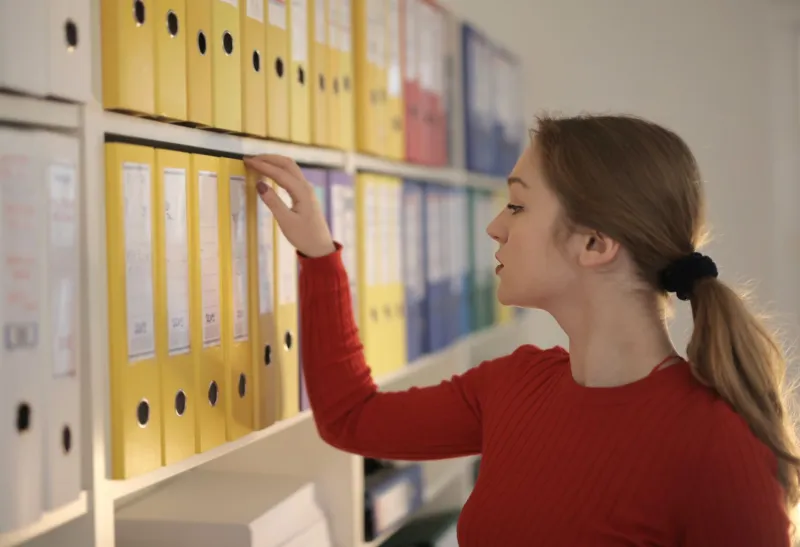
So what does retro-style digital organization actually look like in practice? Think less Marie Kondo, more IT department circa Windows 95. We're talking strict folder hierarchies — Work > Projects > Active > ClientName > Year > Month. We're talking file naming conventions so consistent they could be read by a machine (or, more importantly, by your future self at 2 a.m. when you desperately need that contract from three years ago). We're talking inbox zero achieved not through deletion, but through an elaborate system of nested email folders with names like "HOLD — Review by Friday" and "Receipts — Tax Year 2023."
Some practitioners go even further. Marcus, a graphic designer in Portland, has rebuilt his entire photo library using a folder structure modeled on the filing cabinet his dad kept in their family's home office in 1993. "He had a folder for every year, inside that a folder for every month, inside that folders by event or subject," Marcus explains. "I thought it was insane when I was a kid. Now I have 80,000 photos and his system is the only thing standing between me and complete psychological collapse."
Marcus also refuses to use the cloud as his primary storage. He has two external hard drives. He labels them with a label maker. He is thriving.
Why Now? Why This?
It's worth asking why this particular nostalgia trip is happening right now, in an era of more powerful organizational tools than ever before. The answer, if you squint at it long enough, is pretty obvious: because more powerful tools haven't actually helped.
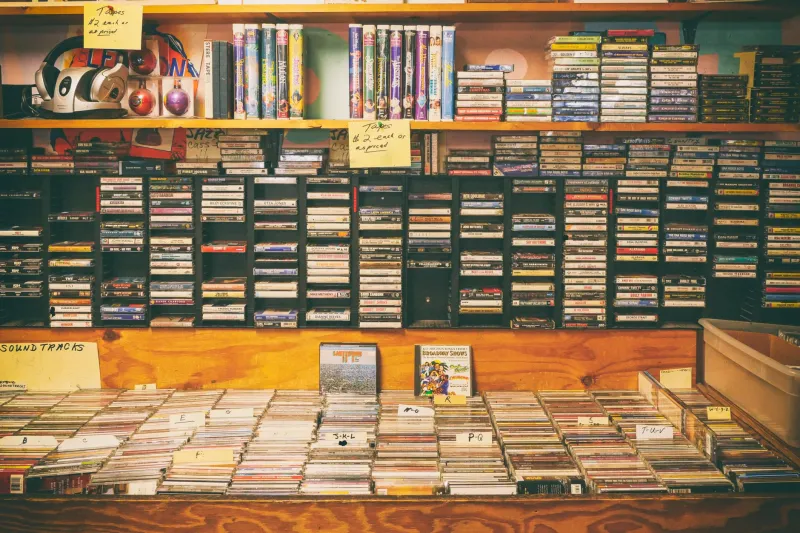
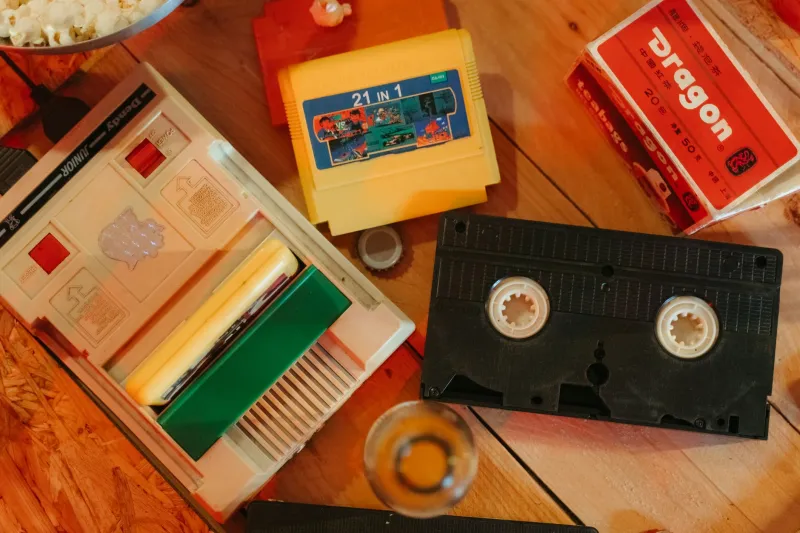
Algorithmic sorting feels passive. Letting Google or Apple decide what's important feels like giving up. And for a generation that grew up watching their parents exercise genuine, tactile control over their information — labeling VHS tapes, organizing recipe cards, building physical filing systems — the total surrender of that control to invisible cloud logic feels vaguely unsettling. Like you don't actually own your own data. Like you're just a guest in someone else's server farm.
"There's something about the physical metaphor of a folder," says Priya. "It maps onto how our brains actually work. A folder is a place. You put things in places. You remember where places are. A search result is just... magic. And magic is great until it doesn't work, and then you have nothing."
There's also, let's be honest, a significant element of control in a world that offers very little of it. Organizing your files won't fix your rent or your 401k or the news. But it will make your Documents folder look incredible, and sometimes that has to be enough.
The Community Is Real (And Extremely Online)
If you think this is a niche of a niche, spend five minutes on any productivity-focused subreddit or YouTube rabbit hole. Videos with titles like "Building the Perfect Folder Structure" and "Inbox Zero: The Old School Method" are pulling hundreds of thousands of views. Discord servers dedicated to file naming conventions have waitlists. People are sharing screenshots of their folder trees the way other people share vacation photos — with obvious pride and a hunger for validation.
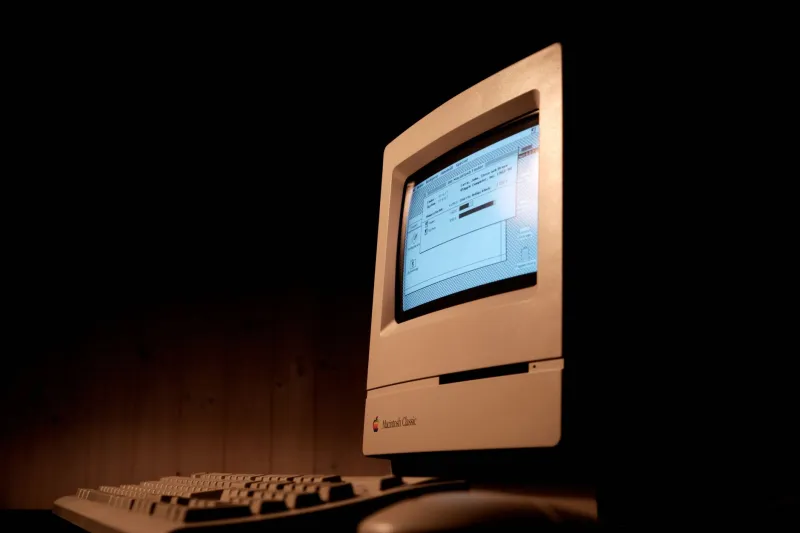
The aesthetic leans deliberately retro. Some enthusiasts use old-school icon packs to make their modern Macs look like System 7. Others keep a physical notebook next to their computer — an actual paper notebook — to log what files live where, a habit borrowed directly from the pre-search-function era when you genuinely needed a map to your own hard drive.
"It's not about being anti-technology," Marcus is careful to clarify. "I'm not smashing my laptop. I just want to feel like I'm in charge of my own stuff again. Like I built something. Like there's a system, and I made it, and it works."
The Defrag Generation
Maybe the deepest nostalgia here isn't for the technology itself but for the feeling it produced — the satisfying clunk of a problem genuinely solved, the quiet pride of a thing done right and done deliberately. Defragging your hard drive used to take hours, and you'd sit there watching the little colored blocks rearrange themselves into perfect order, and it felt like something. It felt like progress you could see.
Modern computing doesn't give you that. It gives you speed and convenience and an inbox that refills faster than you can empty it. It gives you a Photos app that organizes your memories by AI-detected facial expression, which is either impressive or deeply creepy depending on your mood.
Derek, back in Ohio, has no interest in debating the philosophy of it. He just knows that when he opens his laptop now, everything is where he put it, labeled how he labeled it, waiting patiently in its correct subfolder like a well-trained golden retriever.
"It's the only part of my life that makes complete sense," he says.
Honestly? Same, Derek. Same.