Hurry Up and Wait: The Burned-Out Tech Workers Throttling Their Own WiFi as a Form of Therapy
Your internet connection is, by any historical measure, absolutely miraculous. A gigabit fiber line delivers data to your house at speeds that would have read as science fiction in 1998. You can stream four simultaneous 4K videos, download a full album in under a second, and video call someone in Tokyo with zero lag. The infrastructure is staggering. The achievement is real.
And yet.
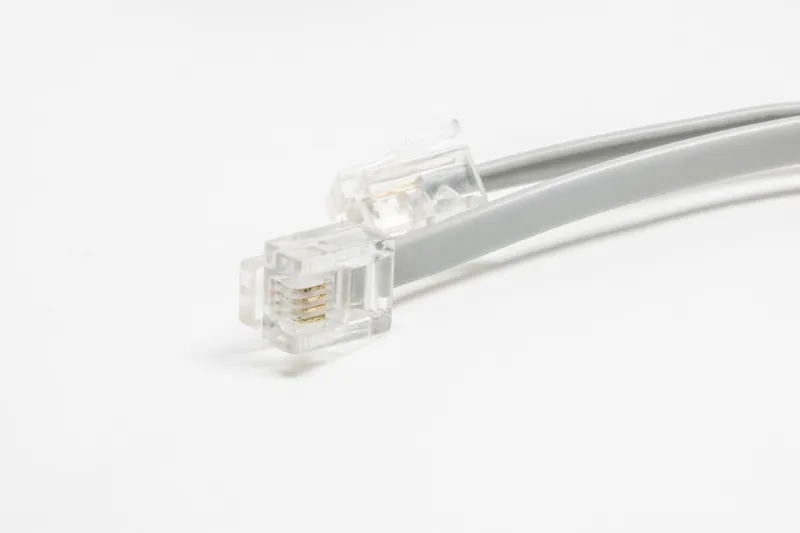
And yet, a quietly growing number of people — many of them working in tech, which makes this even better — are deliberately throttling their home connections down to speeds that would embarrass a 2003 DSL line. They are using router settings, browser extensions, and in some cases actual old hardware to recreate the agonizing, patience-shredding, oddly meditative experience of waiting for the internet.
On purpose. By choice. Because they find it calming.
Welcome to the slow web movement, which is either the most logical response to digital burnout you've ever heard of or the most unhinged, depending on your personal relationship with a loading bar.
The 56k Nostalgia You Didn't Know You Had
Let's be honest with ourselves for a moment. The dial-up era was objectively terrible in many ways. Tying up the phone line. The three-minute wait to load a single image. The soul-crushing experience of a connection dropping mid-download at 94%. Nobody is pretending those things were good.
But there was something else happening in those waiting moments that we've collectively lost and only recently started to notice the absence of. When a page took two minutes to load, you waited. You looked at the progress bar. You thought about other things. You existed, briefly, in a state of enforced patience that the modern internet has completely abolished.
"I realized I couldn't remember the last time I'd waited for anything online," says Priya, a 37-year-old software engineer from Seattle who started throttling her home WiFi to roughly 256 kbps on Sunday mornings. "And I also realized I had the attention span of a goldfish. I don't think that's a coincidence."
It probably isn't.
The Mechanics of Going Slow
For the technically curious, here's how people are actually doing this. The most common method is through router-level Quality of Service settings, which let you cap bandwidth for specific devices or time windows. Set your laptop to a 56 kbps cap on Saturday afternoons and congratulations, you've just traveled back to 1997.
Others use browser extensions specifically designed to simulate slow connections — tools originally built for web developers testing how their sites perform on limited bandwidth, now repurposed as mindfulness aids, which is not a sentence anyone expected to write in 2024.
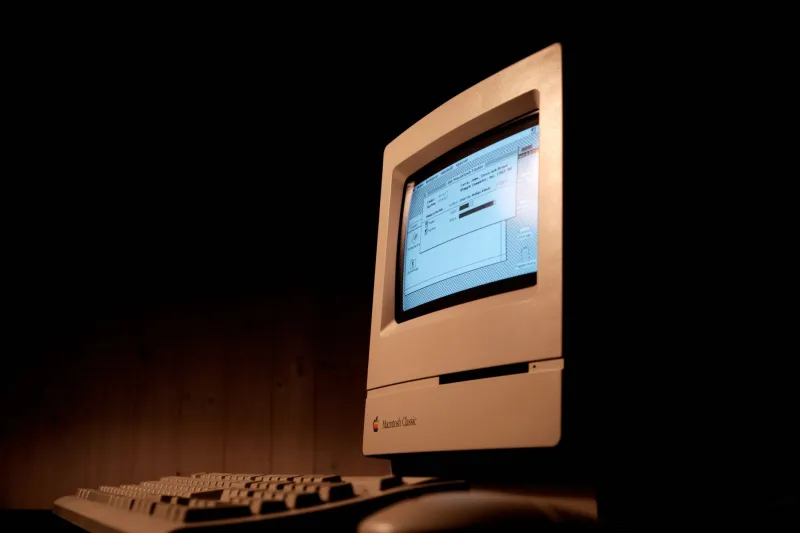
The more committed practitioners have gone further. Old laptops running period-appropriate browsers. Actual hardware from the late '90s and early 2000s, connected to modern internet but running software that processes it at a glacial pace. One guy on a popular tech forum documented his setup involving a 2001 iMac G4 — the lamp-shaped one — connected to broadband but running Internet Explorer 5, which effectively recreates the dial-up experience through sheer computational limitation rather than bandwidth restriction.
This is either brilliant or deeply silly. Possibly both.
Digital Meditation and the Radical Act of Waiting
The people doing this are largely not doing it for nostalgia alone, though nostalgia is definitely part of the appeal. They're doing it because fast internet has, somewhat paradoxically, made them miserable.
Instant loading means instant context-switching means your brain is constantly jumping between tabs, apps, and stimuli without ever settling anywhere long enough to actually think. The friction of waiting — that brief, annoying gap between wanting something and getting it — turns out to have been performing an important psychological function. It was the speed bump that prevented you from consuming seventeen different things in the time it used to take to load one.
"When I throttle my connection, I have to decide if I actually want to visit a website," says Tom, a 44-year-old UX designer from Austin. "If it's going to take forty-five seconds to load, I'm not going to open it on a whim. I have to actually want it. That decision-making process is something I'd completely lost."
This is the slow web's central argument: friction is a feature, not a bug. The loading bar isn't an obstacle between you and content. It's the moment where you decide whether you actually wanted the content in the first place.
The Productivity Paradox
Here's the part that will annoy the hustle culture crowd: multiple people in the slow web community report being more productive on throttled connections, not less.
The logic tracks if you follow it. Fast internet enables infinite tab-opening, constant checking of things that don't need to be checked, and the kind of low-grade digital fidgeting that fills an entire workday without accomplishing much. Slow internet forces serialization. One thing at a time. Finish reading this before opening that. Wait for this to load before deciding what's next.
"I get more actual writing done on my throttled Sundays than I do on any other day of the week," says Priya. "Because I'm not constantly bouncing between seventeen browser tabs. I literally can't."
The constraint is the point. This is the same reason people who write in notebooks often report being more focused than people writing on laptops — the friction of the medium shapes the quality of the engagement.
The Community
Like all good niche internet obsessions, the slow web movement has assembled its own corners of the internet to discuss itself. Subreddits, Discord servers, and a few independent blogs — appropriately, some of which are hosted on deliberately minimal, text-only websites that load in under a second even on throttled connections — have become gathering places for people who want to talk about going slow.
The community has a sense of humor about the irony. They are aware that using fast internet to coordinate their slow internet activities is a little funny. They don't care.
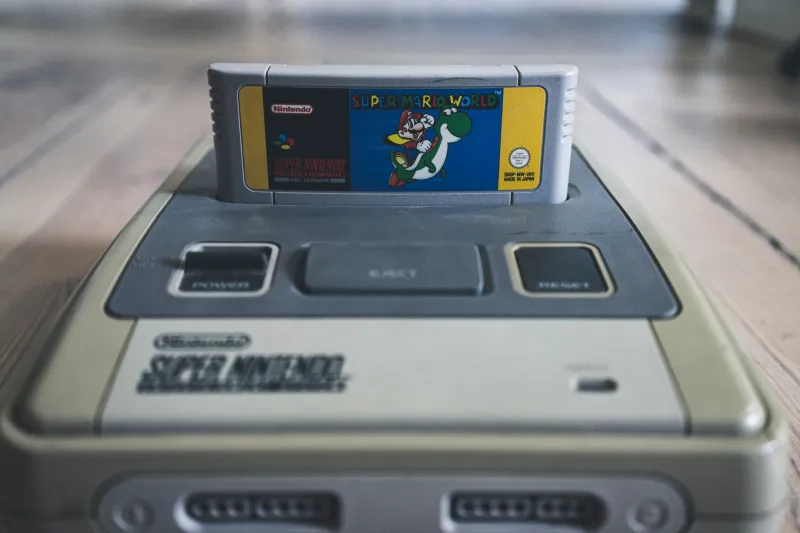
There's also a meaningful overlap with the broader retro tech community — the same people hunting for dumb TVs, collecting old game hardware, and sniffing vintage game boxes at conventions (yes, really, that's a thing) are often the same people experimenting with deliberate digital slowdown. The throughline is a rejection of the idea that faster, smarter, and more connected is automatically better.
The Loading Bar as Life Philosophy
There's something almost poetic about the fact that the loading bar — that little horizontal strip of progress that dial-up users stared at for thousands of cumulative hours — has become a symbol of something desirable rather than something to be eliminated.
We spent twenty years engineering it out of existence, making everything instant, removing every moment of waiting from the digital experience. And now people are putting it back, on purpose, because it turns out that the waiting was doing something for us.
The old internet was slow and annoying and we hated it. But it also made us sit with our thoughts for thirty seconds while a GIF loaded, and apparently we needed that more than we knew.
Some things, it turns out, are worth waiting for. Even if the thing you're waiting for is just the homepage of a website you've visited a thousand times. The wait is the point. The wait is the whole thing.