Ghost Mode Activated: The Exhausted Millennials Torching Their Online Personas and Starting Over as Nobody
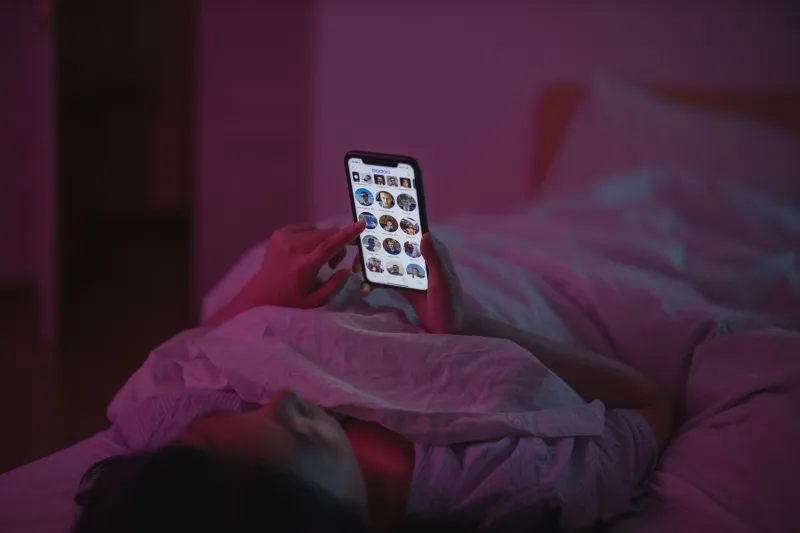
Somewhere around 2009, you made a decision that seemed completely reasonable at the time. You put your real name on the internet. You uploaded a profile photo. You started sharing opinions, life updates, hot takes about television shows, and the occasional deeply regrettable political argument with your cousin from Ohio. You were building a brand, even if you didn't call it that yet.
Fast forward to today, and that brand has become a cage. A very public, very searchable, very exhausting cage with fifteen years of receipts inside it.
Which is exactly why thousands of millennials are currently doing something that would have seemed absolutely unhinged in 2012: deleting everything and starting over as a completely anonymous person with a username like leaf_guy_77 and zero followers.
Welcome to the Great Defriend.
The Weight of Being Yourself Online for a Decade and a Half
Here's the thing nobody tells you when you sign up for social media in your mid-twenties: you are essentially signing a contract to represent a version of yourself forever. Every photo, every opinion, every cringeworthy joke about a movie that aged terribly — it all goes into the archive. And the archive never forgets.
By the time most millennials hit their late thirties, they're dragging around a digital ghost that doesn't quite match who they actually are anymore. The person who posted seventeen times a day in 2011 is not the same person trying to quietly exist in 2024. But the follower count is still there. The tagged photos are still there. The comments section of a 2016 post about a cancelled celebrity is absolutely still there.
"I had 2,300 followers on Instagram and I genuinely did not know who most of them were," says Marcus, a 38-year-old graphic designer from Portland who nuked his account last spring. "Every time I posted anything, I was aware of this invisible audience of strangers judging it. I wasn't posting for me. I was posting for some imaginary committee."
That imaginary committee is the villain of this story.
The Authenticity Trap
Here's the delicious irony at the center of this whole phenomenon: the more social media demanded that people be authentic, the more exhausting the performance of authenticity became.
Remember when brands started telling you to "bring your whole self" online? When every influencer was doing a tearful confessional about their struggles to prove they were real? When "raw and unfiltered" became its own carefully constructed aesthetic? At some point, authentic stopped meaning genuine and started meaning a specific kind of performance that signals genuineness to an audience.
And millennials — a generation that grew up online, watched the whole thing happen in real time, and is frankly pretty good at spotting a con — eventually got tired of running the con on themselves.
The anonymous account is the escape hatch. No photo. No real name. A username chosen for pure randomness rather than personal branding. Follower counts in the single digits, intentionally. It's the digital equivalent of moving to a new city where nobody knows your name, except the new city is just a different corner of the same app you already live on.
Back to the Chat Room
If this sounds familiar, it's because it is. This is essentially a return to the early internet ethos — the one that existed before Facebook decided everyone needed to use their legal name and attach their identity to everything they said forever.
Back in the dial-up days, you were XxMidnightRavenxX in a Yahoo chat room and nobody knew if you were a 14-year-old in New Jersey or a retired librarian in Tucson, and honestly, that was kind of wonderful. You could say things, try on ideas, be weird, be wrong, and then just... log off. No permanent record. No searchable history. No brand.
"My old AIM screen name had zero anxiety attached to it," says Dani, a 41-year-old teacher from Chicago who recently started a private, anonymous Twitter account she uses exclusively to post about her houseplants. "I wasn't representing myself. I was just existing online."
That's the thing the anonymous account restores: the ability to just exist online without the pressure of managing a narrative.
The Mechanics of Disappearing
For the uninitiated, here's how the Great Defriend actually works in practice. Step one: create a new account with a username that means absolutely nothing. No clever references, no initials, no birth year. Something like gravel_updates or tuesday_moth. Step two: follow nobody you actually know in real life. Step three: post without context, without explanation, without any expectation of engagement.
Some people go further. Full account deletion. Years of posts, gone. The digital equivalent of burning your old journals in the backyard. It's terrifying and cathartic in equal measure.
Others take a softer approach, keeping the old account on ice while the new anonymous one becomes their actual online home. A shadow profile. The real you, hiding behind a username that sounds like a randomized password.
Is This Actually Better, or Just Different Anxiety?
Look, we're not going to pretend this is a perfect solution. The internet is still the internet. The algorithms are still watching. Even gravel_updates is generating data somewhere.
But there's something genuinely meaningful about the impulse behind the Great Defriend. It's a rejection of the idea that your online presence is a product to be optimized. It's a refusal to let fifteen years of archived posts define who you're allowed to be today. And it's a quiet, slightly petty act of resistance against a digital culture that decided personal branding was a life skill everyone needed.
Most of all, it's a return to something the early internet understood instinctively: sometimes you just want to be anonymous and weird online without it mattering. Sometimes leaf_guy_77 is enough of an identity.
The chat rooms knew that. It just took us twenty years to remember it.