Free Coasters, Premium Prices: The Collectors Hoarding AOL Discs Like They're Made of Gold
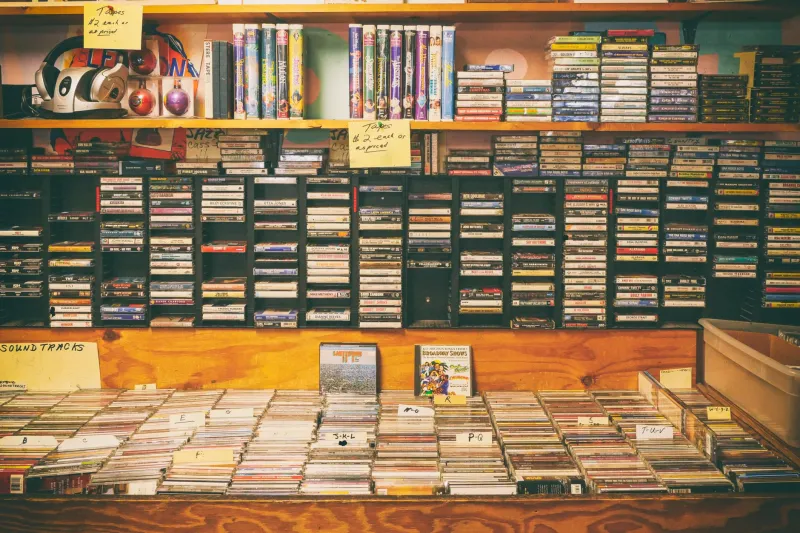
Somewhere in a climate-controlled spare bedroom in suburban Ohio, a 34-year-old named Marcus has carefully arranged 212 AOL installation CDs in matching acrylic display cases, sorted by version number, packaging variant, and year of distribution. He paid somewhere north of $400 assembling this collection. He has never, not once in his life, actually installed AOL from a physical disc.
And honestly? He's not even the most dedicated person doing this.
The vintage AOL disc market — yes, that's a real sentence — has quietly exploded over the past few years, transforming what was arguably the most universally mocked piece of junk mail in American history into a legitimate collectible with its own grading conventions, rarity tiers, and collector communities. The same shiny coasters your parents used to open wine bottles with are now showing up on eBay with asking prices that would make your jaw drop, and a surprisingly devoted fanbase is happily paying them.
The Most Ubiquitous Object in American History (That Nobody Wanted)
To understand why people are losing their minds over these things, you have to remember just how completely inescapable AOL discs once were. Between the early 1990s and the mid-2000s, America Online mailed out an estimated one billion — with a b — promotional installation discs. They arrived in cereal boxes, fell out of magazines, got taped to the covers of PC gaming publications, and showed up unsolicited in mailboxes with the cheerful persistence of a golden retriever who has found a tennis ball.
At peak AOL, the company was reportedly spending $300 million a year just on disc distribution. Postmaster General accounts from that era describe mail carriers developing genuine psychological fatigue from hauling the things. People collected them in shoeboxes just to throw them away more efficiently. A journalist once famously papered an entire bathroom wall with them as a stunt.
The discs came in cardboard sleeves, jewel cases, and custom tin packaging. They offered 30 free hours, then 45, then 1,000 hours (which, if you did the math, was just over 41 days of continuous dial-up, which is a thing nobody needed). Each new version brought a slightly different interface, a new loading screen, and a fresh reason for your parents to accidentally run up a $200 phone bill.
So Why Are People Paying Real Money For Them Now?
Here's where the nostalgia economy gets interesting. The very qualities that made AOL discs the punchline of a decade — their omnipresence, their unsolicited nature, their gleeful optimism about a future that turned out to be dial-up speeds and "You've Got Mail" notifications — are exactly what makes them compelling artifacts today.
"They're this perfect little time capsule," explains Denise, a 38-year-old graphic designer in Portland who started collecting ISP promotional discs two years ago and now owns over 300 pieces, including several rare regional variants and a handful of co-branded discs from defunct retailers. "Every single design choice on these things screams a specific year. The fonts, the color gradients, the promises they're making about what the internet is going to do for your life. It's like holding a little rectangle of pure 1997."
She's not wrong. The graphic design on AOL discs is a genuinely fascinating document of how mainstream America understood the internet at various points in its development. Early versions lean hard on the information superhighway metaphor — lots of speed lines, chrome lettering, a visual vocabulary borrowed wholesale from car advertisements. Later versions go softer, more domestic, emphasizing email and family connection. By the early 2000s, the designs are practically begging you to believe broadband isn't going to make all of this obsolete.
Spoiler: broadband made all of it obsolete.
The Rarity Rabbit Hole
Like any collectible market worth its salt, AOL disc collecting has developed its own elaborate hierarchy of desirability. Common versions from peak distribution years (1997-2001) can be found for a dollar or two at thrift stores, assuming anyone even bothered to donate them. But the edges of the catalog get genuinely interesting.
Early floppy disk versions from the late 1980s and very early 1990s, before CDs became standard, command significant premiums. Co-branded discs produced in partnership with specific retailers, airlines, or fast food chains are highly sought after — a McDonald's Happy Meal AOL disc from 1999 recently sold for $47, which is approximately 47 times what it cost to produce. Regional variants with localized phone numbers or custom artwork for specific markets are considered holy grails by serious collectors.
Competitor discs from other ISPs — CompuServe, Prodigy, NetZero, EarthLink, the short-lived and wonderfully named "Juno" — add another dimension entirely. Collectors who focus on the full ISP promotional disc landscape treat AOL as merely one chapter in a larger story about how America got sold on the internet, one unsolicited plastic disc at a time.
"People think it's just AOL," says Marcus, the Ohio collector, "but CompuServe had some absolutely wild packaging, and a complete Prodigy disc set is genuinely hard to find in good condition. The cardboard sleeves deteriorate. A lot of people just threw them out immediately."
The irony of objects designed to be discarded becoming valuable precisely because most people discarded them is not lost on anyone involved in this hobby.
The Condition Question
Condition, as with all physical media collecting, is everything. Discs with original packaging intact are worth dramatically more than loose discs. Sealed, never-opened packages are the apex of the market — a still-factory-sealed AOL Version 5.0 jewel case in pristine condition is the kind of thing collectors discuss in hushed, reverent tones.
The functional irony here is exquisite: the discs that were saved from their intended purpose (being immediately ripped open and installed on a Windows 98 machine by a bored teenager) are now the most valuable precisely because they survived intact. Uselessness turned out to be a preservation strategy.
Denise keeps her most prized pieces in archival sleeves. She photographs new acquisitions before adding them to her display. She has opinions — strong ones — about proper storage humidity. This is a woman who once used an AOL free trial disc as a drinks coaster at a college party and felt absolutely nothing.
"Context changes everything," she says, which is either a profound statement about nostalgia or a very reasonable explanation for why she now owns a $65 CompuServe floppy set. Possibly both.
The Broader Point Nobody Wants to Admit
There's something genuinely touching underneath the humor here. These discs represent a specific, unrepeatable moment — the brief window when the internet felt like a promise rather than an infrastructure, when a shiny disc in your mailbox meant something genuinely new was arriving in your life. The breathless excitement of that era, the sense that everything was about to change in ways nobody could quite articulate, got pressed into plastic and mailed to every household in America.
Most of us were too busy complaining about them to notice.
Now the people who grew up rolling their eyes at the weekly delivery are paying real money to hold that feeling again. To own a small, circular piece of evidence that the future once showed up unsolicited at your door, promising 1,000 free hours of something nobody fully understood yet.
That's worth at least a few bucks on eBay. Probably more if the jewel case is still sealed.