Bricks, Buttons, and Bliss: Why the Original Game Boy Is Beating Modern Handhelds at Their Own Game
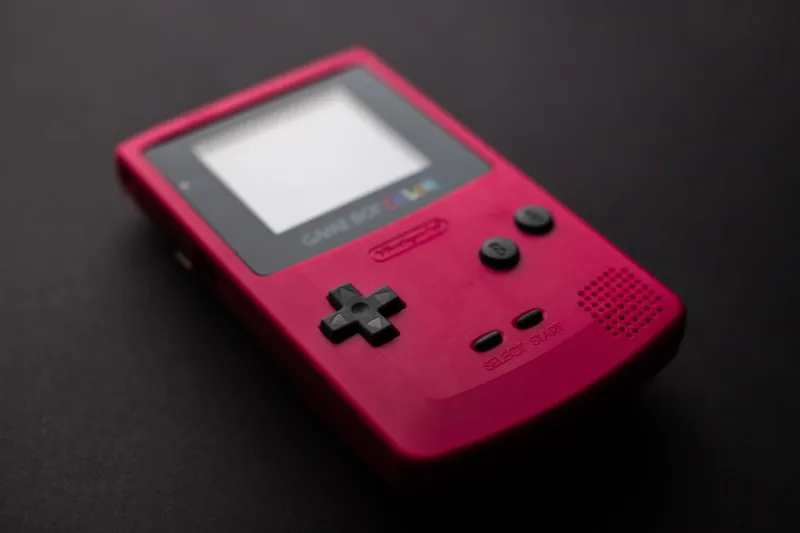
Somewhere in a suburb outside of Columbus, Ohio, a 34-year-old named Derek is carefully disassembling a 1991 Game Boy with the focused intensity of a neurosurgeon. He's not fixing it because it's broken. He's installing a backlit IPS display, a new rechargeable battery, and a custom shell the color of a creamsicle. When he's done, he'll have a device that looks vintage, feels vintage, and plays every Game Boy cartridge ever made — but runs like something from 2025. He will not, under any circumstances, be buying a Nintendo Switch Lite.
Derek is not alone. Across the country, a quiet but unmistakable resurrection is underway. The original Nintendo Game Boy — that gloriously inelegant gray slab released in the US in 1989 — has clawed its way back into relevance with a ferocity that has baffled industry analysts, delighted collectors, and mildly embarrassed the modern handheld gaming market.
The Numbers Don't Lie (And They're Wonderfully Weird)
Let's get the elephant in the room out of the way: nobody is manufacturing new original Game Boys. Yet on eBay and Mercari, unmodified units in good condition routinely fetch $60 to $120, while professionally modded versions with upgraded screens and shells regularly sell for $150 to $300. A mint-in-box original? You're looking at $400 and climbing. Compare that to, say, a brand-new Anbernic RG35XX — a modern handheld emulator with a full-color screen and a library of thousands of games — which retails for around $60 and sits on virtual shelves collecting digital dust.
People are actively choosing the older, more limited, objectively less capable device. And they are paying a premium to do it.
Retro gaming marketplaces have reported year-over-year increases in Game Boy sales that outpace nearly every other vintage console category. Meanwhile, the modding community has exploded into a full-blown cottage industry, with small businesses like Hand Held Legend and Retro Game Repair Shop shipping upgrade kits to customers in all 50 states and beyond.
The Modding Scene: When Nostalgia Gets a Firmware Update
If you haven't followed the Game Boy modding community, prepare to have your mind gently rearranged. What started as hobbyists swapping out the original reflective screen for something you could actually see indoors has evolved into an entire ecosystem of aftermarket hardware that would make Nintendo's engineers do a double-take.
The most popular upgrade is the IPS backlit display swap — a modification that transforms the original's notoriously dim, motion-blurring screen into something crisp and vibrant without losing the classic aesthetic. Then there are rechargeable battery kits that eliminate the need for four AA batteries every six hours. Custom shells in hundreds of colors and translucent designs. Speakers that don't sound like a kazoo trapped in a tin can. Pro-Sound audio mods. Even overclocking kits that let you run games at higher speeds.
Communities on Reddit (r/Gameboy has nearly 200,000 members), Discord servers, and YouTube channels like "The Retro Future" have created a knowledge base so comprehensive that a determined beginner with a tri-wing screwdriver and a soldering iron can build a genuinely impressive custom unit over a weekend. It's part craftsmanship, part obsession, and entirely the kind of hands-on hobby that modern gaming simply cannot replicate.
"There's something deeply satisfying about holding a finished build," says Marcus, a modder based in Portland who sells custom units through his Etsy shop. "You made something. You can see every decision you made. It's not like downloading an app."
Why Not Just Use Your Phone? (Please Don't Ask That)
This question gets asked constantly by people who have clearly never tried to play Tetris on a touchscreen. The tactile feedback of the Game Boy's satisfying, clicky buttons — that distinct, slightly mushy resistance that somehow still feels perfect — is something no touchscreen has ever successfully replicated. There's a reason mechanical keyboard enthusiasts exist. Buttons matter.
Beyond the physicality, there's the focus factor. A Game Boy plays Game Boy games. It doesn't notify you about emails. It doesn't suggest you check Instagram. It doesn't have seventeen apps running in the background silently consuming your attention. You pick it up, you play Pokémon Red, you put it down. The constraint is the feature.
Jamie, a 28-year-old graphic designer from Austin who describes herself as "too young to have owned one the first time around," picked up a modded Game Boy Color last year after burning out on mobile gaming. "I thought I just hated video games," she says. "Turns out I hated notifications and infinite scroll disguised as video games. The Game Boy fixed that."
The Nostalgia Premium (And Why It's Actually Rational)
For Gen X and older millennials, the Game Boy isn't just a device — it's a time machine. It's long car trips before smartphones existed, Link's Awakening under the covers with a flashlight, trading Pokémon cards in the school cafeteria. The emotional weight attached to that plastic brick is substantial, and the market prices it accordingly.
But here's what's interesting: a significant portion of the current buyer base has no personal nostalgia for the original hardware. Gen Z collectors are driving prices up on items they never owned as children, attracted by the aesthetic, the community, and the deliberate limitations of the format. The Game Boy has become cool in the way vintage cameras and vinyl records became cool — not despite being old technology, but because of it.
There's also a growing anti-subscription, anti-streaming sentiment that makes owning physical cartridges feel like a genuine act of rebellion. Your copy of Super Mario Land cannot be delisted. Nintendo cannot patch away your save file. The cartridge you own today will work on the same hardware in 30 more years, assuming you've kept the battery fresh.
The Brick Wins
The gaming industry has spent decades trying to make handheld gaming sleeker, thinner, more connected, more capable. And they've largely succeeded. Modern handhelds are technical marvels. They're also, for a growing number of players, kind of exhausting.
The Game Boy offers something those marvels can't: simplicity with soul. A defined library. Physical media. Buttons that click. A battery that dies and forces you to put the thing down and go outside. It's a closed loop in an era of infinite content, and people are paying real money for that closure.
Derek finishes his creamsicle build, drops in a Kirby's Dream Land cartridge, and fires it up. The IPS screen glows warm and sharp. The speakers hum with that familiar 8-bit soundtrack. He leans back in his chair with the satisfied look of someone who has, against all modern logic, made exactly the right choice.
The brick endures. Long may it reign.