Rewind Culture: Why Thrift Store VHS Hunting Is the Hottest Hobby Nobody Saw Coming
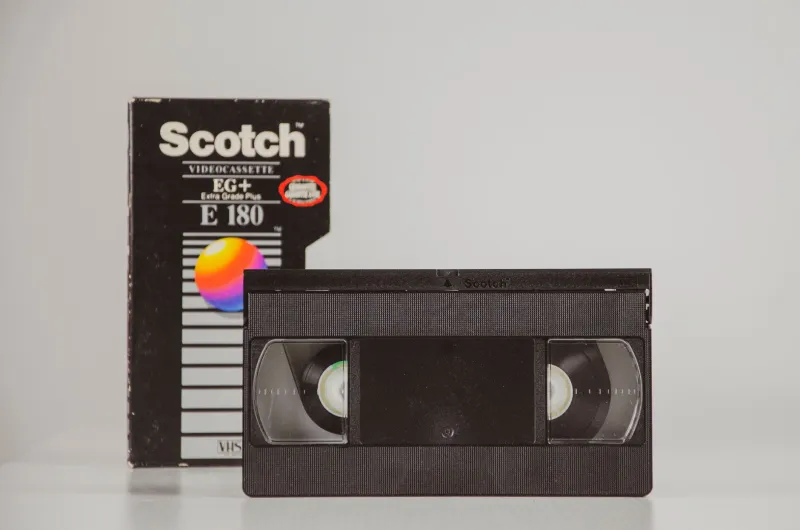
There's a specific smell that every child of the '90s carries somewhere deep in their memory banks — the faintly musty, slightly plasticky aroma of a rental tape sliding out of its cardboard sleeve. It's not exactly a perfume anyone would bottle, and yet it's apparently powerful enough to send grown adults on weekend pilgrimages through Goodwill bins, Salvation Army shelves, and flea market folding tables in search of deteriorating magnetic cassettes. Welcome to the VHS collecting boom, a phenomenon so gloriously weird that even the people doing it can't fully explain it.
And yet here we are.
The Tape Is Back, Baby
To understand why anyone in 2024 would voluntarily seek out a format that requires rewinding, occasionally eats itself, and delivers picture quality roughly equivalent to watching TV through a screen door, you have to appreciate what streaming has quietly stolen from us. Netflix doesn't have everything. Hulu doesn't have everything. No platform — despite their collective billions — has managed to digitize the full breadth of what got released on VHS between roughly 1977 and 2003.
That gap is enormous, and collectors know it.
We're talking about thousands of regional releases, direct-to-video gems, obscure horror titles distributed by companies that no longer exist, and made-for-TV movies that aired once and vanished into the ether. If you want to watch a certain low-budget slasher from 1987 or a workout tape hosted by a minor celebrity, there's a solid chance your only legal option involves a thrift store, an eBay auction, and a VCR you'll need to track down separately.
The Psychology of Owning Something That Might Literally Die
Here's where things get genuinely interesting from a collector psychology standpoint. Part of VHS collecting's appeal is the inherent fragility of the format. Magnetic tape degrades. Mold grows on it. The oxide layer that holds your movie slowly flakes away with each play. Owning a VHS tape isn't just owning a movie — it's a race against entropy, a small act of preservation against the universe's general tendency toward chaos.
Collectors on forums like VHSCollector.com and dedicated Facebook groups talk about this with an almost reverent intensity. There's a genuine archival mission embedded in the hobby. When someone finds a sealed copy of a regional video store exclusive from 1994, they're not just scoring a cool shelf piece — they're potentially saving the only surviving copy of something that no algorithm will ever recommend to anyone.
That's a surprisingly heavy responsibility for a $3 Goodwill find.
The Thrill of the Hunt (And the Heartbreak of the Bargain Bin)
Ask any serious VHS hunter about their best find and watch their eyes light up like a kid on Christmas morning circa 1991. The thrill isn't just about what you find — it's about where and when you find it. A sealed big-box horror tape buried under a stack of workout videos at an estate sale in rural Ohio. A Blockbuster ex-rental copy with the original sticker still attached, found at a church rummage sale in suburban New Jersey.
The geography matters. Different regions of the country got different releases. Regional video store chains sometimes ordered exclusive titles or produced their own promotional tapes. A collector in Seattle might find releases that a collector in Miami has never seen, and vice versa. This regional variation gives the hobby a genuinely nationwide scope — road trips become tape-hunting expeditions, and every unfamiliar thrift store is a potential treasure chest.
Of course, for every unicorn find, there are approximately nine hundred copies of Titanic, Forrest Gump, and the Disney Black Diamond collection (which, despite persistent internet mythology, is mostly not worth the fortune people think it is — sorry, Mom).
eBay, Collector Forums, and the Secondary Market That Shouldn't Exist But Does
The secondary market for VHS has evolved from a casual curiosity into a surprisingly structured ecosystem. eBay remains the dominant marketplace, where rare titles regularly fetch prices that would have seemed absolutely insane at a 1998 Blockbuster checkout counter. Sealed copies of certain horror titles have sold for hundreds — occasionally thousands — of dollars. The 1986 big-box release of Halloween recently sold for over $1,500. A sealed copy of Tales from the QuadeZone once cleared $10,000, though that's admittedly an extreme outlier.
Beyond eBay, specialized Discord servers and collector forums have created tight-knit communities where members share finds, trade duplicates, and debate the relative merits of various tape manufacturers with the kind of passion usually reserved for sports rivalries. VHS isn't just a format to these folks — it's a community, a shared language, a reason to spend Saturday morning at a thrift store instead of scrolling TikTok.
Which, honestly, sounds like a pretty healthy trade.
The Streaming Paradox: You Can Watch Anything, Except the Things You Actually Want
There's a delicious irony at the heart of the VHS revival. We live in the era of peak content accessibility — more movies and TV shows are technically available to more people than at any point in human history. And yet the collector community keeps growing, driven in large part by the yawning gaps in the streaming catalog.
Licensing disputes, expired rights, studio indifference, and the sheer logistical nightmare of digitizing everything mean that a staggering percentage of cinematic history exists only on physical media. For films that never made the leap to DVD, let alone Blu-ray or streaming, VHS is the last stop. The tape or nothing.
That reality gives collectors a genuine sense of purpose that goes beyond mere nostalgia. They're not just chasing childhood feelings (though that's certainly part of it). They're functioning as informal archivists, ensuring that weird little pieces of pop culture survive long enough for someone to care about them properly.
So Should You Start Hunting?
If you're feeling the pull, the barrier to entry has never been lower — or higher, depending on what you're after. Common titles at thrift stores still go for fifty cents to a couple of dollars. A decent VCR can be found for under $30 at most estate sales or on Facebook Marketplace. The basic infrastructure of the hobby is genuinely affordable.
The expensive part is the rabbit hole you'll inevitably fall into once you realize that the tape you bought for a dollar is actually a regional variant with an alternate ending, and now you need to find the other three regional variants to complete the set.
But hey — at least it's more interesting than doomscrolling.
Be kind, rewind, and welcome to the hunt.